
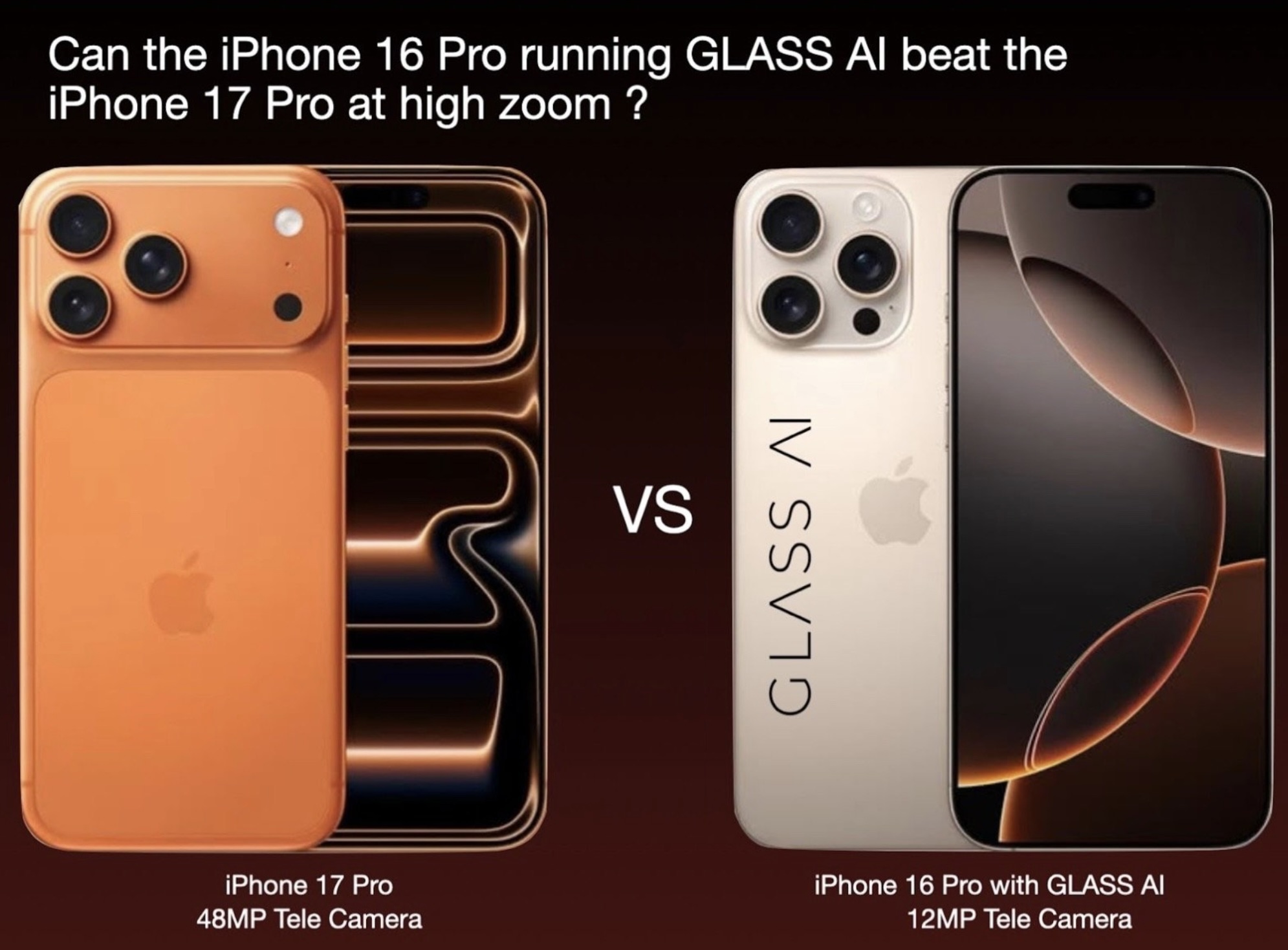


The annual refresh cycle of Apple's iPhone lineup always brings anticipation, but the leap from the iPhone 16 Pro to the iPhone 17 Pro introduced a particularly significant upgrade in a critical area for photographers: telephoto capabilities. With the iPhone 17 Pro featuring a new 48MP telephoto camera and a significantly larger sensor, it seemed like a total game changer for mobile shooters. But is it? This article dives into the impressive advancements of the iPhone 17 Pro's zoom system and then explores how Glass AI, when paired with last year’s iPhone 16 Pro 12MP telephoto camera, is redefining what's possible, allowing it to punch remarkably close to its successor's weight.
TL;DR: When applied to the iPhone 16 Pro’s 12MP telephoto, Glass AI’s camera-specific neural pipeline reconstructs fine detail with enough fidelity to rival—and occasionally surpass—the iPhone 17 Pro’s native 48MP telephoto output at high zoom.
The iPhone 17 Pro: A New Era for Telephoto on Mobile
Apple's commitment to pushing the boundaries of smartphone photography has never been clearer than with the iPhone 17 Pro's new telephoto module.The 17 Pro marks a new era with a 48MP telephoto sensor at a 4x optical zoom, a remarkable quadrupling of resolution over its predecessor. But it's not just about megapixels. This new sensor is also physically larger, and it uses its 48MP in two distinct ways: Pixel-Binned Mode (4x to 8x): In this range, the sensor uses 2x2 pixel binning, combining a quad-pixel cluster into one large "super-pixel". This produces an exceptionally high-quality 12MP image, maximizing light-gathering for cleaner shadows, richer colors and less noise.Center Crop Mode (8x and beyond): The moment you hit 8x zoom, the sensor's strategy switches. It abandons pixel binning and instead captures a 1:1 12MP crop directly from the center of the 48MP sensor. This approach leads to maximum raw detail with the price of much higher noise. From 8x onwards, any "digital zoom" is simply a progressively tighter crop of this 12MP center region. This hybrid combination gives the 17 Pro an incredible advantage. While its lens is optically wider (4x vs the 16 Pro's 5x), it has 4x the total megapixels to work with. This means that for any given equivalent crop, the iPhone 17 Pro has 3.2x more pixels to render the image (48MP / 12MP = 4x pixels; 5x / 4x = 1.25x focal length difference; 4 / 1.25 = 3.2x).This 3.2x pixel advantage is most obvious when you push the digital zoom. “More pixels help, but they are not the whole story. If the pipeline cannot preserve fine structure, extra resolution just gives you a sharper version of blur. The goal is to recover real detail that the sensor actually captured.” Vishal Vinod, a Machine Learning Engineer at Glass Imaging, says.

For many, this upgrade alone would justify the leap. The iPhone 17 Pro offers a level of telephoto versatility and image quality that felt out of reach in a smartphone just a generation ago.
Glass AI: More Than Just Megapixels
Glass AI is not another photo editing or post-processing app; it's a revolutionary imaging pipeline built on advanced computational photography methods, particularly in the realm of super-resolution and image reconstruction. At its core, Glass AI leverages sophisticated machine learning models that are trained to meticulously understand the optical imperfections of a lens and sensor phenomena that cause image quality degradation. The magic lies in its ability to combine the full image processing pipeline into one Neural Network. This single network simultaneously interpolates missing sensor information, corrects for optical aberrations, distinguishes between noise and details, super-resolves sub-pixel information, and combines multiple exposures for an HDR, noise-free, high-resolution image. Unlike other approaches, such as simple upscaling, denoising and sharpening which often lead to a blurry, painterly look, Glass AI's method is far more holistic.“We are not trying to generate any new texture. We train the model to model the lens, sensor, and noise behavior so the output maintains its fidelity to the scene. If the RAW evidence is non-existent, the network should not create it.” Vinod says. “When applied to the iPhone 16 Pro's 12MP telephoto output, Glass AI doesn't just make the image bigger; it analyzes the existing pixels and, based on its training, reconstructs plausible high-frequency details obscured by sensor noise and optical aberrations. This restores textures, sharpens edges, and extracts detail that would be lost using conventional processing.” said Shivansh Rao, Machine Learning Engineer at Glass Imaging.



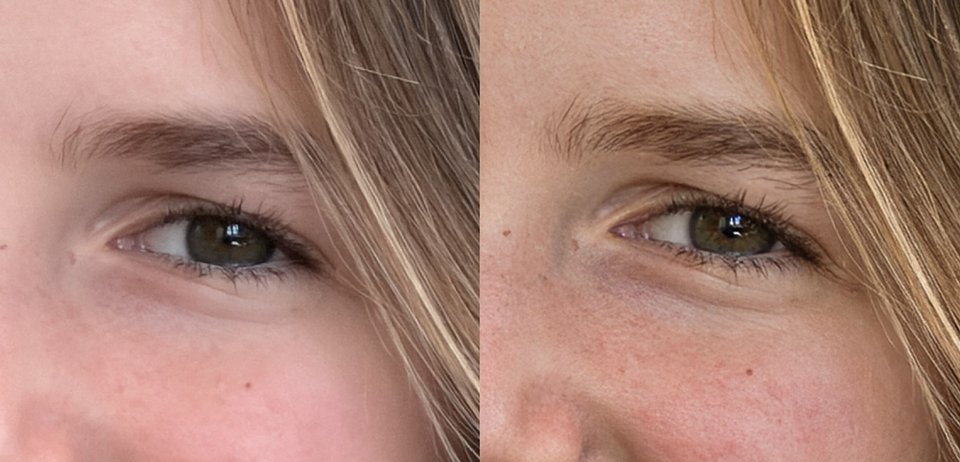
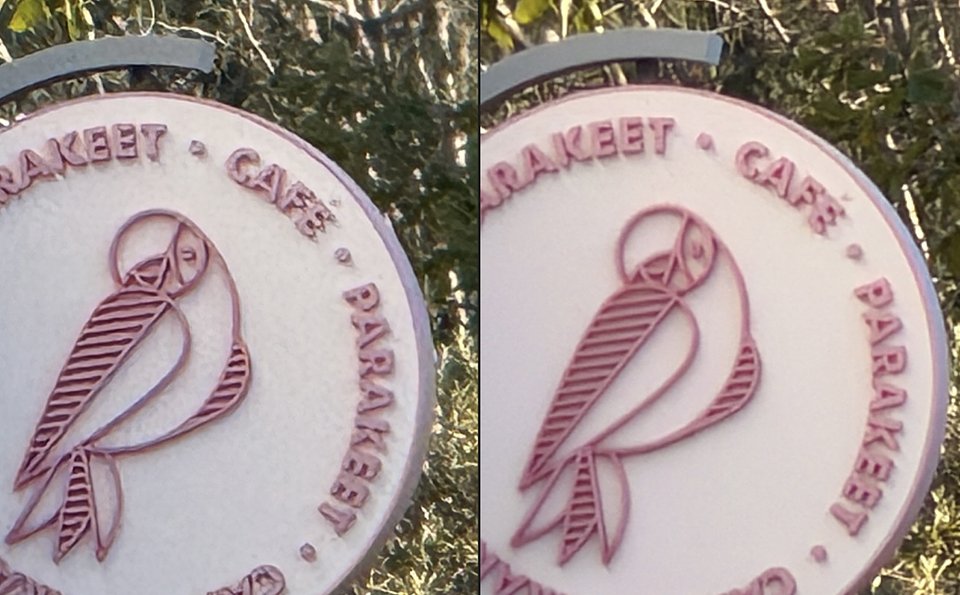
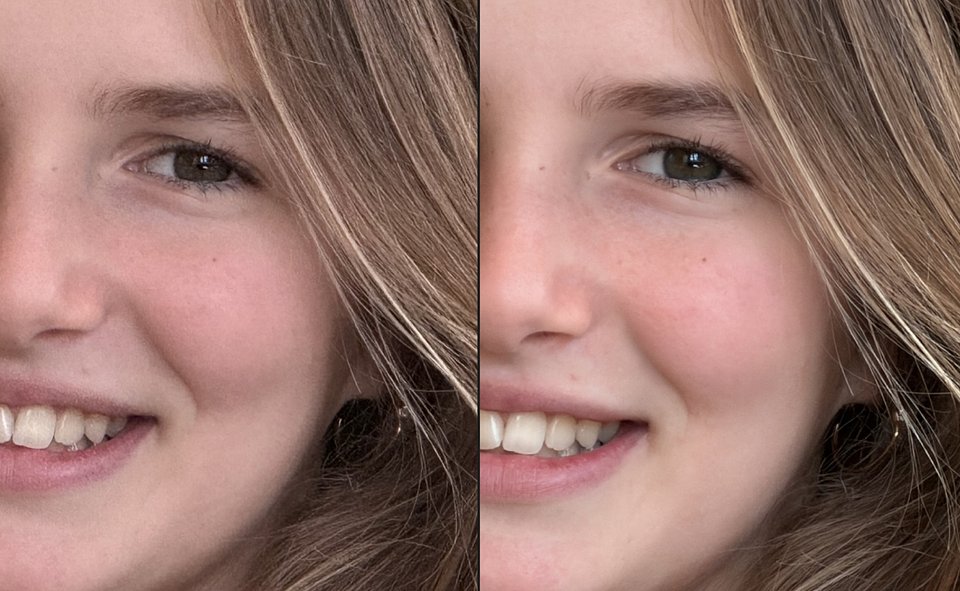
As these examples demonstrate, Glass AI accurately reconstructs fine details and maintains precise color fidelity, all while avoiding AI-driven hallucinations.
The Showdown: 17 Pro (48MP) vs. 16 Pro (12MP) + Glass AI
Now for the audacious claim: can an iPhone 16 Pro with a 12MP telephoto, processed through a finely tuned Glass AI model, genuinely compete with the native 48MP output of the iPhone 17 Pro? The answer, surprisingly, is yes. In many scenarios, the results are remarkably close—and sometimes, even better. Let's look at the evidence:
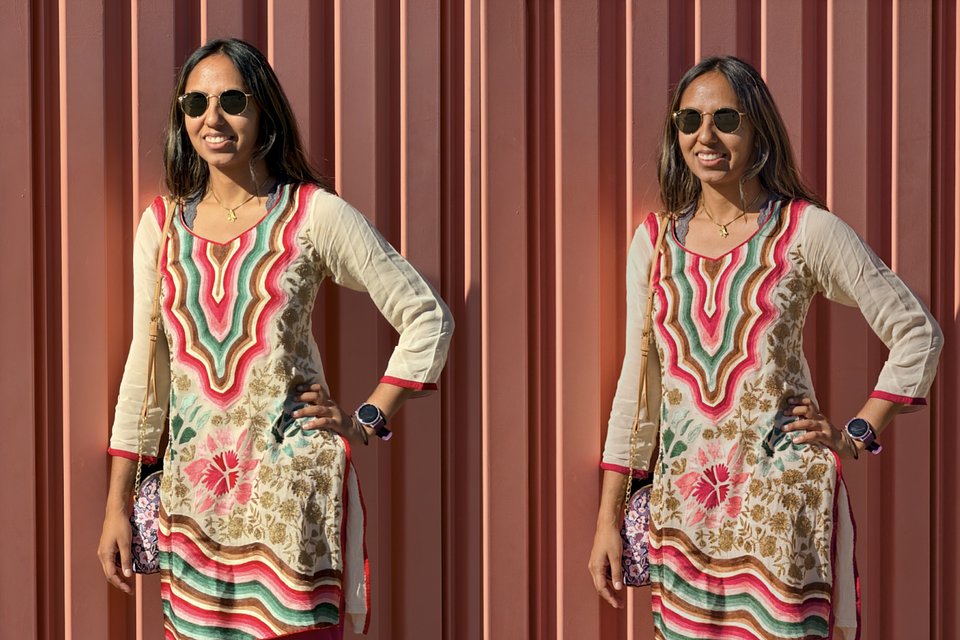

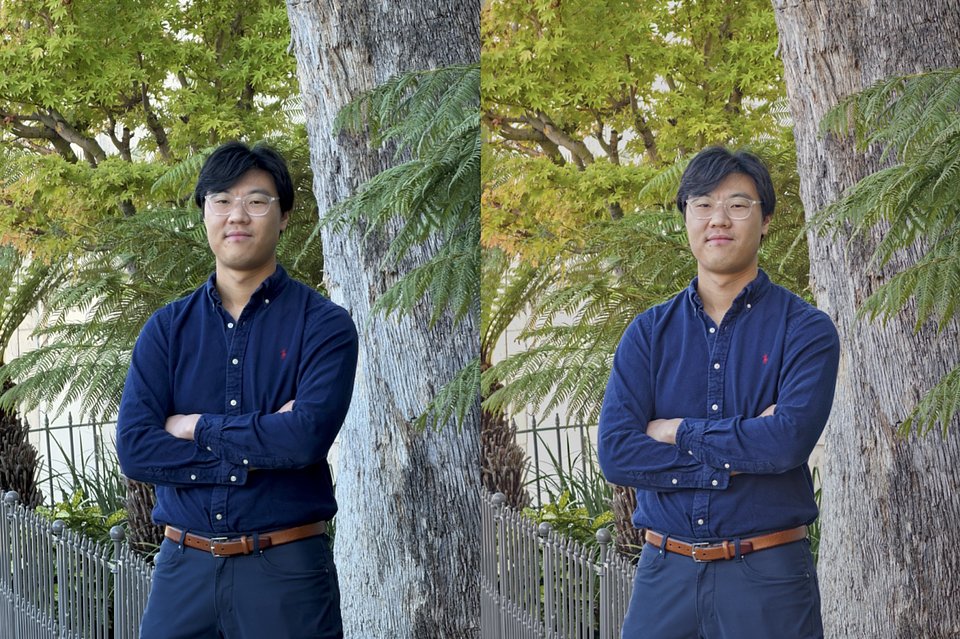



“The reason the 16 Pro can compete is that the model is tailored to that exact camera module. When you calibrate the processing to a specific lens and sensor, you can recover detail that the default pipeline leaves on the table, especially at high zoom.” Vinod says.

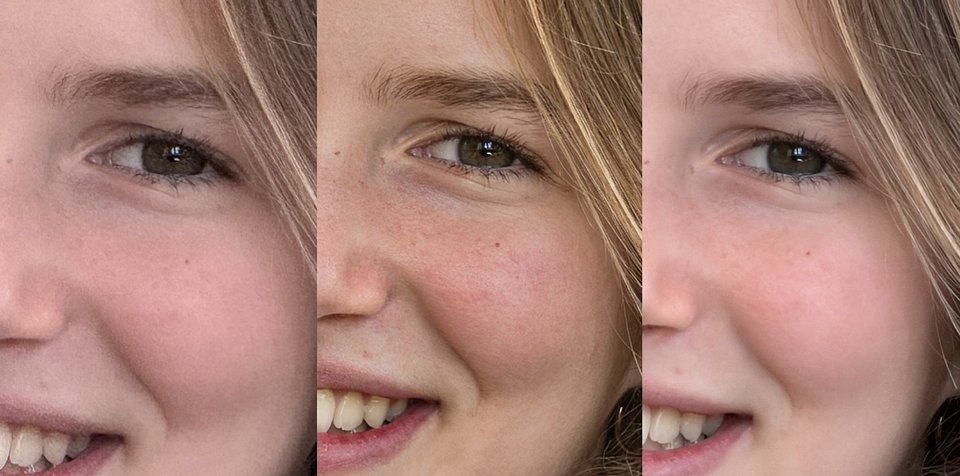
These visual comparisons underscore a remarkable truth: the gap between dedicated hardware advancements and intelligent software processing is rapidly narrowing. While the iPhone 17 Pro's native output is undeniably impressive, Glass AI's ability to extract and reconstruct detail from the iPhone 16 Pro's 12MP telephoto sensor creates a truly competitive, and often better image.
The New Battlefield: AI vs. Hardware
There's no question that Apple achieved a huge improvement in telephoto capabilities with the iPhone 17 Pro. By designing a new lens and pairing it with a massive, high-resolution sensor with 4x the pixel count, they've proven they can deliver a major leap in zoom performance.But what this experiment shows is that this impressive performance isn't exclusively the domain of new hardware. A similar level of improvement can be substantially achieved using the older iPhone 16 Pro hardware, as long as it's coupled with a novel AI model, like Glass AI, that has been specifically tailored and trained for that exact camera system.This revelation has a tantalizing implication. If Glass AI can so dramatically elevate the 12MP iPhone 16 Pro, what could it do for the 48MP iPhone 17 Pro? It strongly indicates that the iPhone 17 Pro itself, coupled with this level of tailored AI processing, may finally be ready to leave the realm of "smartphone photography" and begin competing directly with the image quality of dedicated DSLR and mirrorless cameras.

